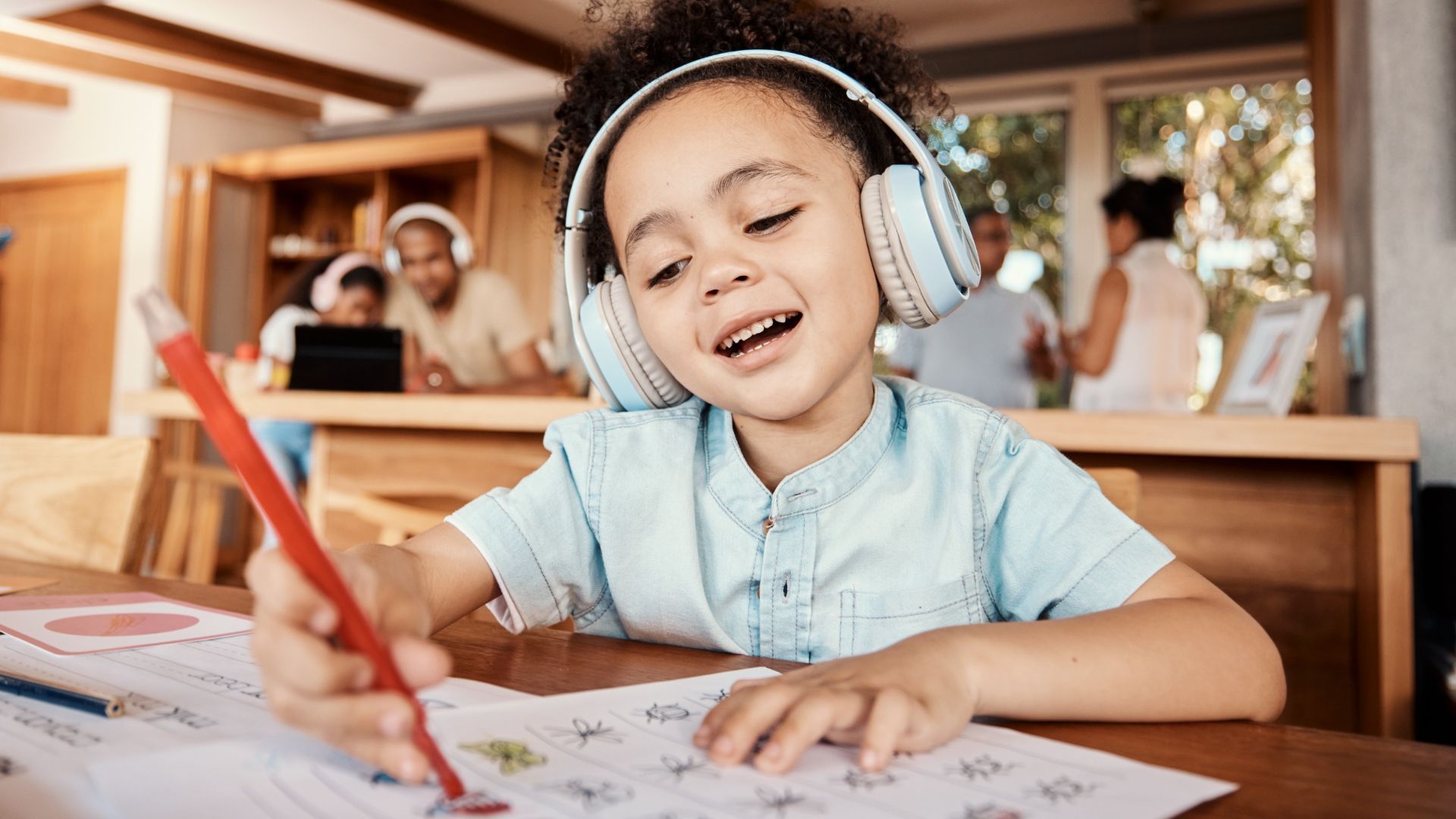
Auditory processing refers to how the brain interprets and makes sense of the sounds we hear. It’s not about how well the ears work, but how the brain organizes and understands auditory information. A child with auditory processing difficulties may hear sounds clearly but struggle to interpret speech, follow directions, or distinguish between similar sounds.
These challenges can affect communication, learning, and social interactions. With early identification, occupational therapy and speech therapy can help children strengthen their listening and comprehension skills, improving attention, confidence, and academic success.
Understanding How Auditory Processing Works
When someone speaks, the ear receives sound waves and sends them to the brain. The brain then processes these signals, helping us recognize language, tone, and meaning. Children with strong auditory processing skills can easily follow conversations, remember verbal instructions, and tune out background noise.
However, if there is a disruption in how the brain processes sound, a child may experience Auditory Processing Disorder (APD) also known as Central Auditory Processing Disorder (CAPD). This does not mean the child has hearing loss; instead, it means the brain struggles to correctly interpret sounds that the ears detect.
Signs and Symptoms of Auditory Processing Challenges
Auditory processing difficulties can look different from child to child. Some children may appear distracted or inattentive, while others may struggle academically despite normal hearing tests.
Common signs include:
- Trouble following multi-step directions
- Difficulty distinguishing similar-sounding words (e.g., “cat” vs. “cap”)
- Frequent requests for repetition (“What?” or “Huh?”)
- Difficulty understanding speech in noisy environments
- Poor listening comprehension
- Challenges with reading, spelling, or phonics
- Easily distracted by background sounds
Because these symptoms overlap with ADHD or language delays, a comprehensive evaluation by an audiologist or occupational therapist is key to identifying the root cause.
How Auditory Processing Affects Learning and Behavior
Children with auditory processing difficulties often experience frustration in classroom and social settings. They may miss important information during lessons or misunderstand instructions, leading to confusion or avoidance.
In school, these challenges can affect:
- Reading and spelling: Difficulty processing phonetic sounds impacts decoding and word recognition.
- Following directions: Complex or multi-step instructions may be overwhelming.
- Attention and focus: Struggling to filter background noise can make listening exhausting.
- Social interaction: Misunderstanding peers can lead to embarrassment or withdrawal.
These difficulties can create a cycle of frustration that impacts self-esteem and motivation—but with awareness and support, children can thrive.
How Occupational Therapy and Related Services Help
Therapy for auditory processing challenges focuses on improving listening, attention, and communication through structured, evidence-based activities. Occupational therapists often collaborate with speech-language pathologists to address both sensory and language-based components.
Therapy may include:
- Auditory discrimination activities – teaching the child to tell the difference between similar sounds.
- Sound sequencing games – improving memory and processing speed for spoken information.
- Environmental modification – reducing background noise or providing visual supports for instructions.
- Sensory integration therapy – helping the brain organize and interpret sensory input, including sound.
- Parent education – equipping families with strategies to support listening and learning at home.
By combining auditory training with sensory-based interventions, therapists help children build stronger listening foundations that support attention, comprehension, and learning.
The Role of Sensory Processing in Auditory Development
Auditory processing is one part of a child’s broader sensory processing system—the way the brain organizes and responds to all sensory input (sound, touch, sight, movement, etc.). When the auditory system is overly sensitive or under-responsive, it can affect emotional regulation and participation.
For example:
- A child who is sensitive to sound may cover their ears or avoid loud environments.
- A child who is under-responsive may seem to ignore verbal instructions or need repetition.
Sensory-based occupational therapy can help regulate how a child’s nervous system processes sound, improving tolerance, focus, and engagement in daily life.
Parent Education: How to Support Auditory Processing at Home
Parents play a key role in helping children strengthen listening skills and manage auditory challenges. Here are some simple, family-friendly strategies:
- Reduce background noise – Turn off the TV or music during homework or conversations.
- Speak slowly and clearly – Pause between instructions and use visual cues.
- Check for understanding – Ask your child to repeat directions in their own words.
- Use rhythm and music – Clapping patterns or songs can improve auditory memory.
- Play listening games – “Simon Says” or sound-based matching games build auditory attention.
- Collaborate with therapists and teachers – Consistent strategies across environments promote progress.
Through ongoing parent education and awareness, families can provide structured, supportive routines that help children listen and learn with confidence.
Helping Children Listen, Learn, and Thrive
Understanding what auditory processing is helps parents recognize why a child may struggle to follow directions, focus, or keep up in class. With early identification and consistent therapy, children can build stronger listening and communication skills that support learning and everyday success.
At 40:31 Rehab & Wellness, our team specializes in occupational therapy for auditory and sensory processing. We work closely with families to create individualized programs that build confidence, focus, and real-world communication skills—helping every child reach their full potential.